Dagger
Files
Dublin Core
Title:
Dagger
Description:
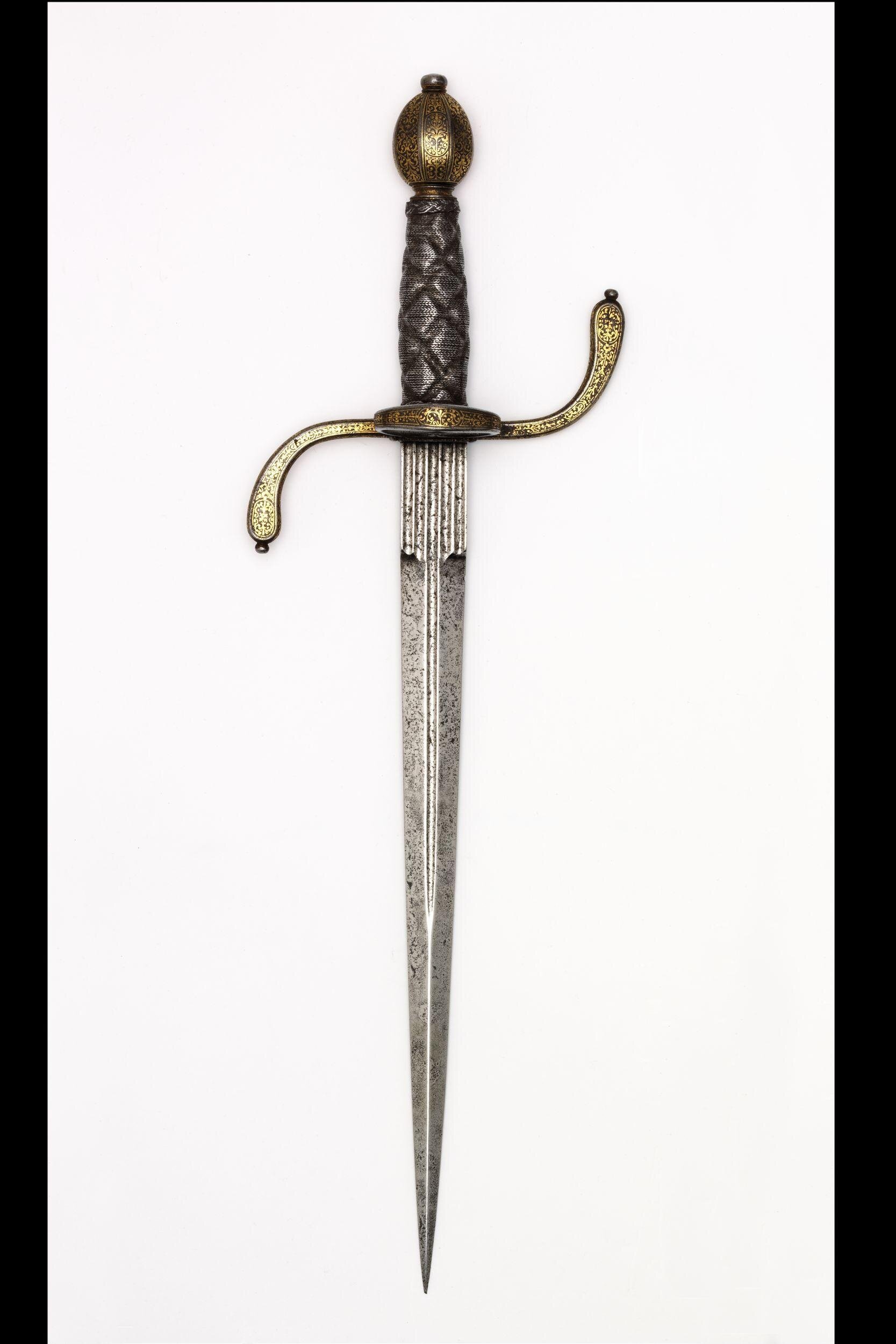
This dagger would have once been twinned with a rapier, a long sword with a slender blade and elaborate hilt. The rapier and dagger combination was primarily designed for self-defence. The sixteenth-century rapier was both a slashing and stabbing weapon. Its accompanying dagger was used in the left hand for parrying and stabbing in close. The stiff slender blades of both were designed to pierce clothing rather than armour.
The raper and dagger were also male fashion accessories worn at court, in procession and about town. They projected an image of honour based on social standing and, if necessary, defended it in one-on-one combat. The private duel was one consequence of the development of the rapier and dagger.
New specialised fencing techniques were not welcomed by all. The conservative English defence expert, George Silver, felt a noble heritage of purpose-made war blades, clubs, flails and maces had been sacrificed at the altar of fashion as swords and daggers became faddish civilian accessories. ‘We like degenerate sonnes, have forsaken our forefathers vertues with their weapons.’
The intricate patterns of gold and silver wire on the surface of the pommel and knuckle guard is known as damascening. As the name implies, damascening originated in countries to the east of Europe, particularly Syria (Damascus), Persia, Egypt and Turkey. Imports of Islamic goods through Venice gave north Italian craftsmen plenty of inspiration when decorating anything from brass dishes to hand-warmers. The great Florentine sculptor and goldsmith Benvenuto Cellini described his ‘burning desire’ to try his hand at making daggers ‘engraved by iron tools with patterns of beautiful foliage, in the Turkish style, which were nicely filled in with gold’.
Date: 1560
Provenance: Italy
Materials: Steel, gold
Dimensions: Length: 47 cm, Width: 14.5 cm, Depth: 6.0 cm
Rights:
Current Location: Victoria and Albert Museum
Identifier: M.65-1947
Relation:
Rojas Donat, Luis. 2020. “The Duel in Medieval Western Mentality.” In Ideology in the Middle Ages, 175–202. Amsterdam: Amsterdam University Press. https://doi.org/10.1515/9781641892612-010.