Browse Items (32 total)
Sort by:
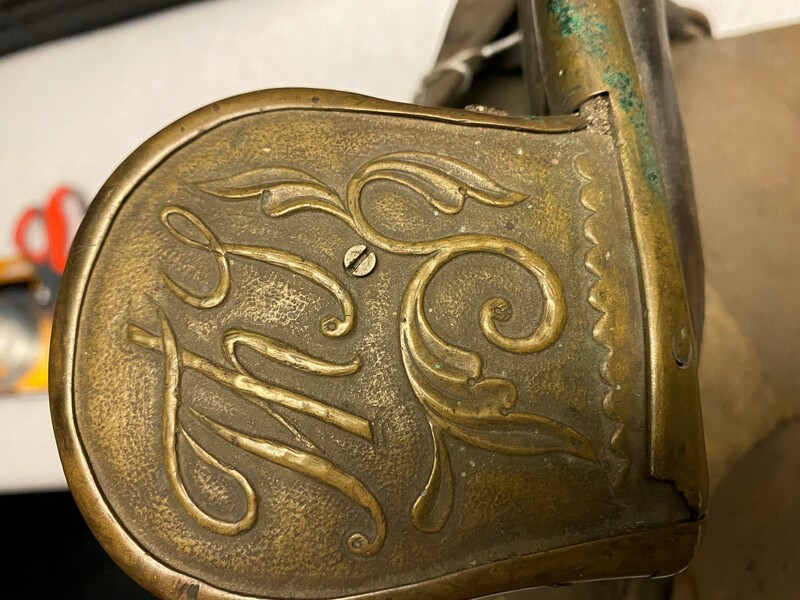
This is a double-cinch side saddle with a backrest and likely ahistorical stirrups. It has the initials or word "Thy" on the pommel and 1875 on the back of the backrest in bronze (?). This item was collected and accessioned in 1922 by C.C. Willoughby…
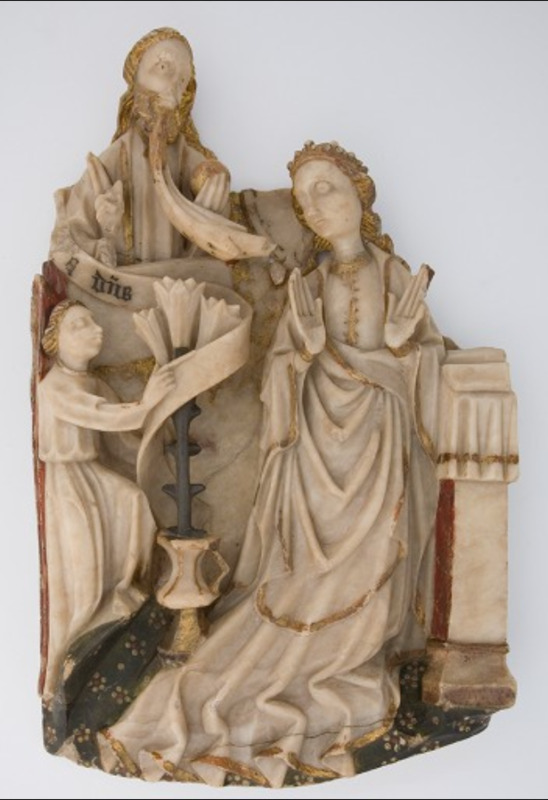
This object is made of polychromed and gilt alabaster from the British culture. It depicts a scene of the annunciation.
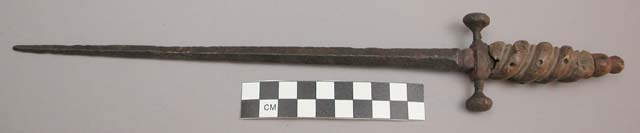
Dagger, tapered square blade, iron cross guard, spiral wood grip, stone inlay.
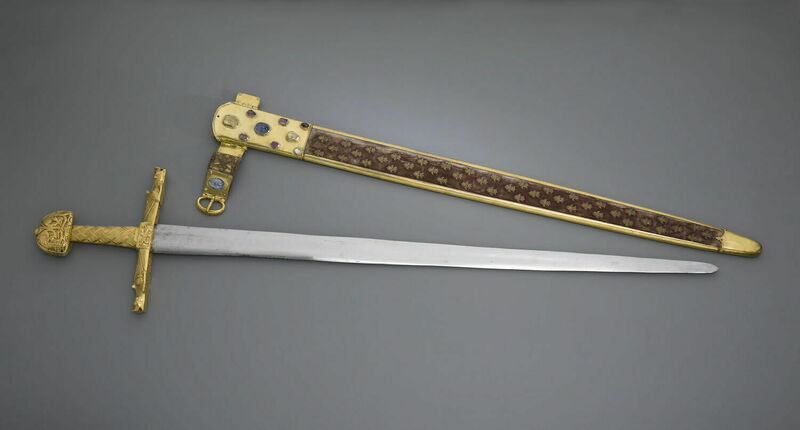
The coronation sword of the kings of France entered the Louvre during the French Revolution along with the other ceremonial instruments, previously kept in the treasury of the Abbey of Saint-Denis. The sword is composed of very diverse elements. Both…
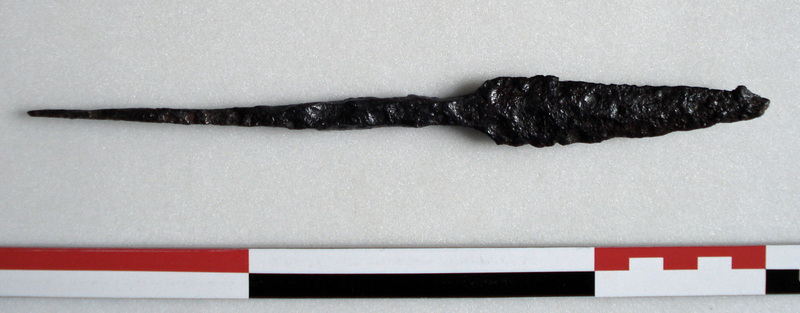
Iron javelin-head. The throwing spear has a short triangular blade with angled shoulders, which is formed of a lozenge section and tanged.
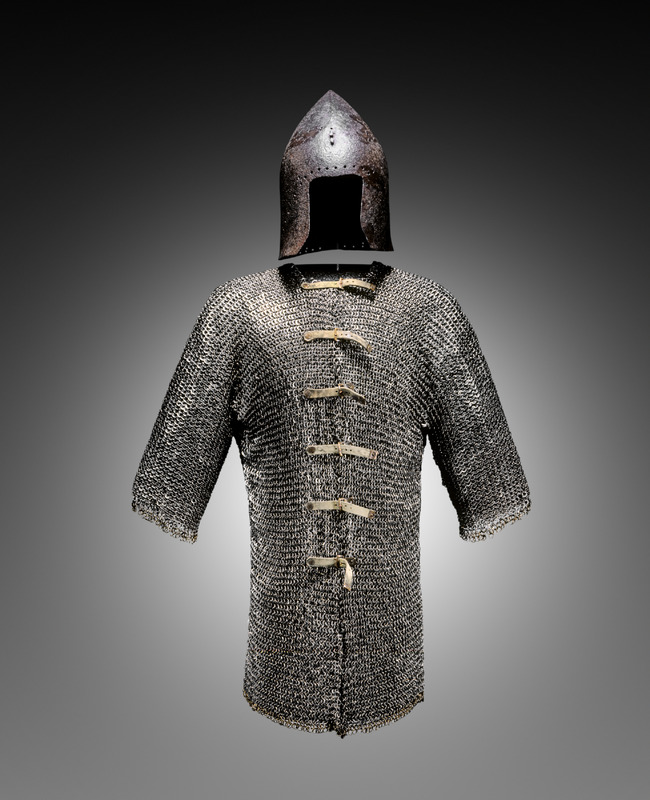
Mail armor was the predominant form of metal body defense for European knights until about 1350. The term derives from the Old French word maille (mesh), implying a protective textile. Each mail garment was constructed of small linked metal rings and…
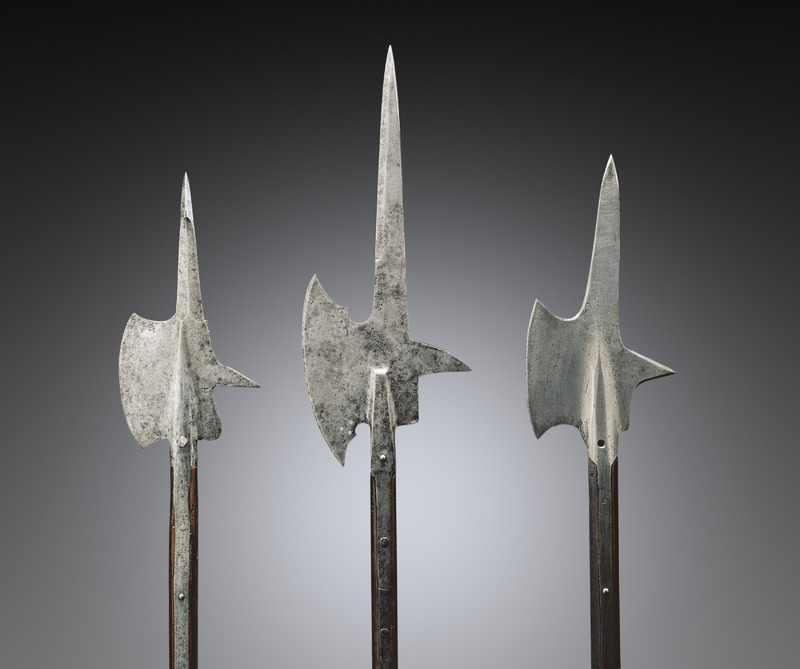
The halberd was a staff weapon favoured by European infantries (foot soldiers) of the 1400s and 1500s for its versatility and deadly effect. The word halberd comes from the German words Halm (staff) and Barte (axe). The halberd is, in fact, an axe…
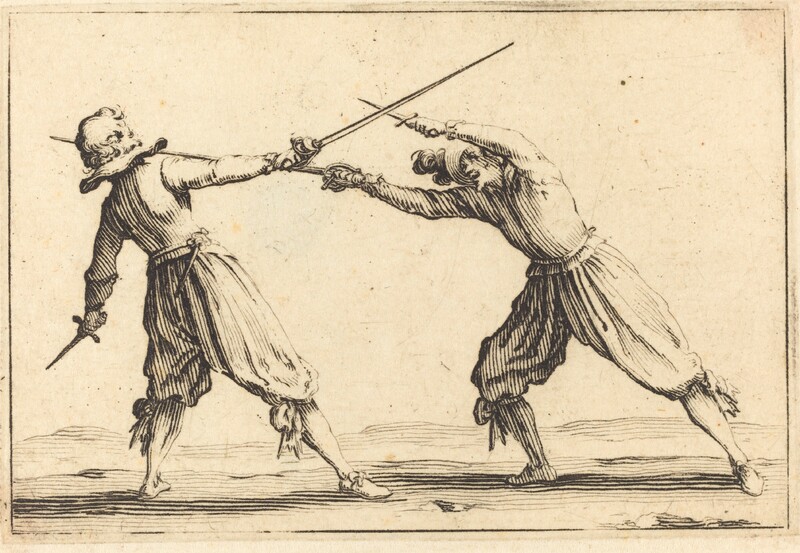
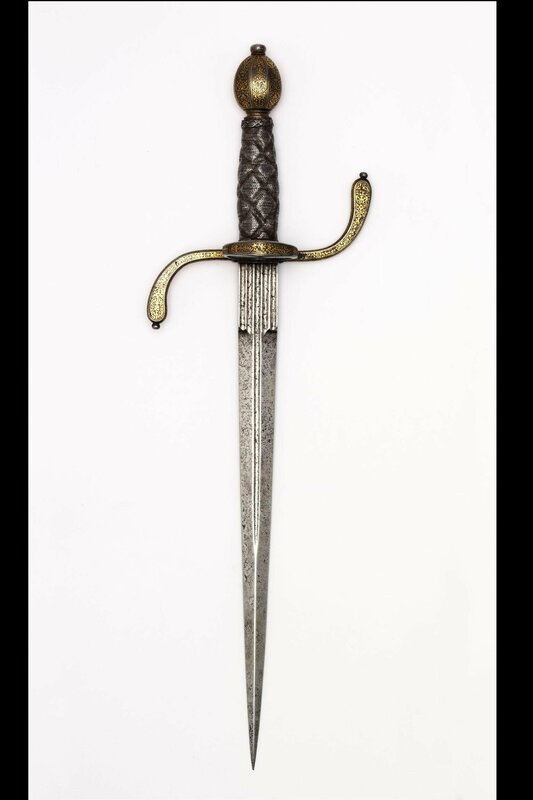
This dagger would have once been twinned with a rapier, a long sword with a slender blade and elaborate hilt. The rapier and dagger combination was primarily designed for self-defence. The sixteenth-century rapier was both a slashing and stabbing…
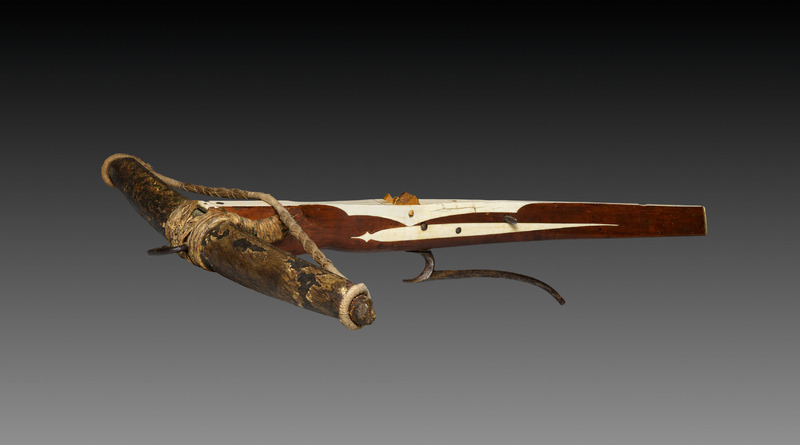
The cranequin, or winding device sitting on top of the crossbow, made it easier to span for reloading. With a full quiver, a container for bolts and arrows, a hunter could bring home plenty of meat.