Browse Items (32 total)
Sort by:
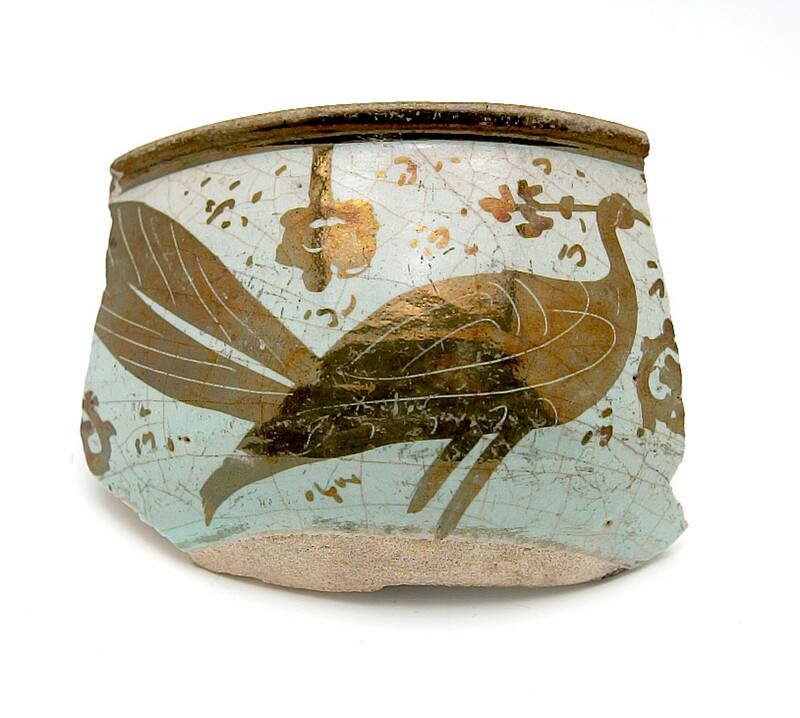
The "Luster bowl sherd with peacock" is an 11th-century ceramic lusterware originating from the Fatimid period (Egypt). The lusterware, which features a golden peacock on a lustre glazed ceramic, was created by an unknown artist using ceramic…
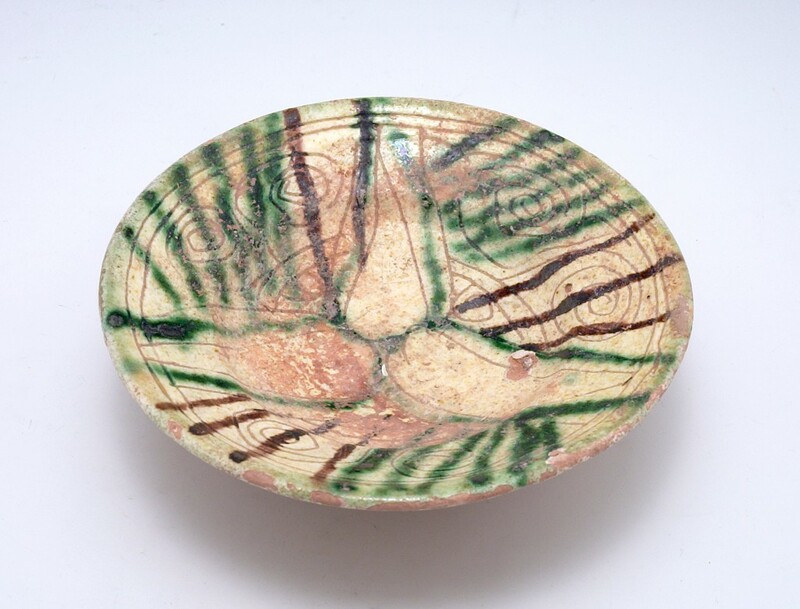
The reddish earthenware of this dish is covered on the interior and partially on the exterior with a white slip. The interior holds a loosely incised design of two circles, each with double outlines, and a trio of radiating lanceolate leaves. Freely…
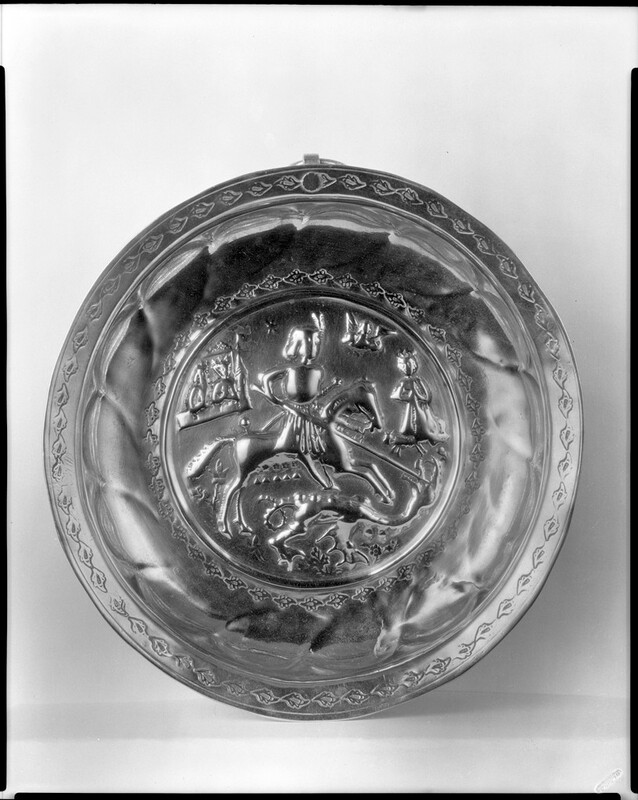
Brass bowl depicting Saint George and the Dragon. Gift of Mrs. George S. Selfridge to Busch-Reisinger Museum, 1965
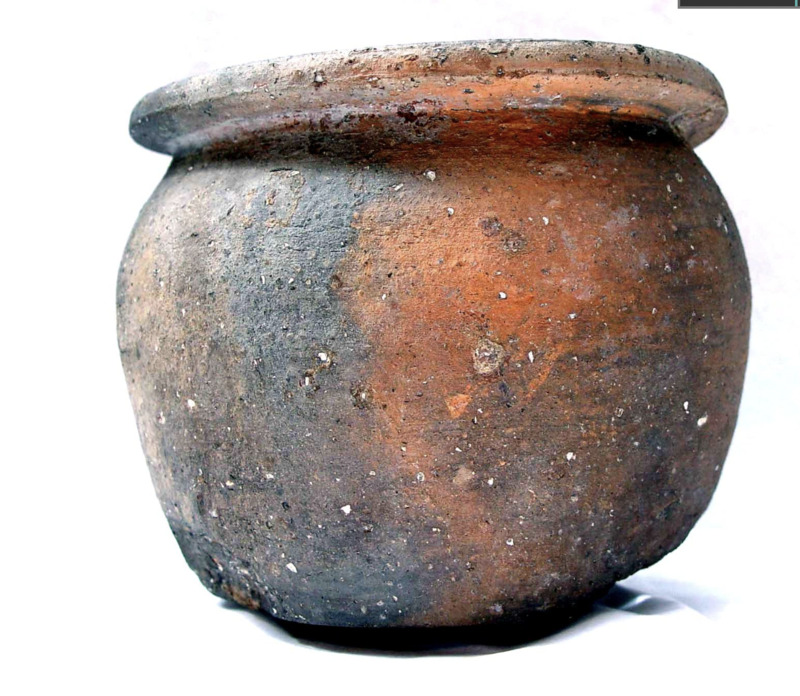
Early Medieval Chalky ware pot from Smithfield, London (England). Wheel thrown with grey-buff fabric.
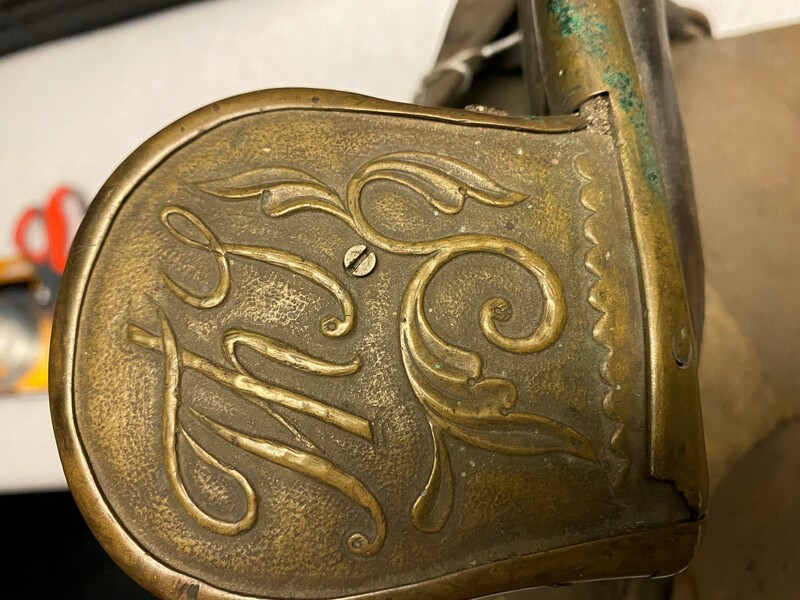
This is a double-cinch side saddle with a backrest and likely ahistorical stirrups. It has the initials or word "Thy" on the pommel and 1875 on the back of the backrest in bronze (?). This item was collected and accessioned in 1922 by C.C. Willoughby…
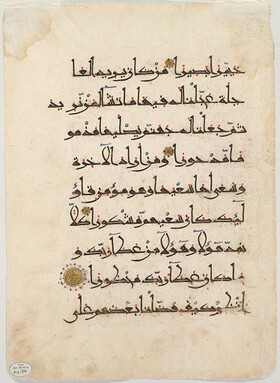
This is the right hand side of a handwritten bifolio of the Qur'an, produced toward the end of the Abbasid Period, when books proliferated throughout the Islamic world and the Qur'an became a written text rather than an oral tradition. The artifact…
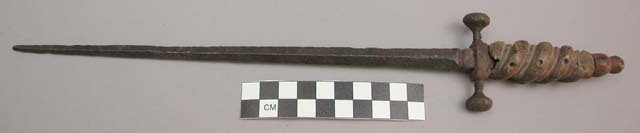
Dagger, tapered square blade, iron cross guard, spiral wood grip, stone inlay
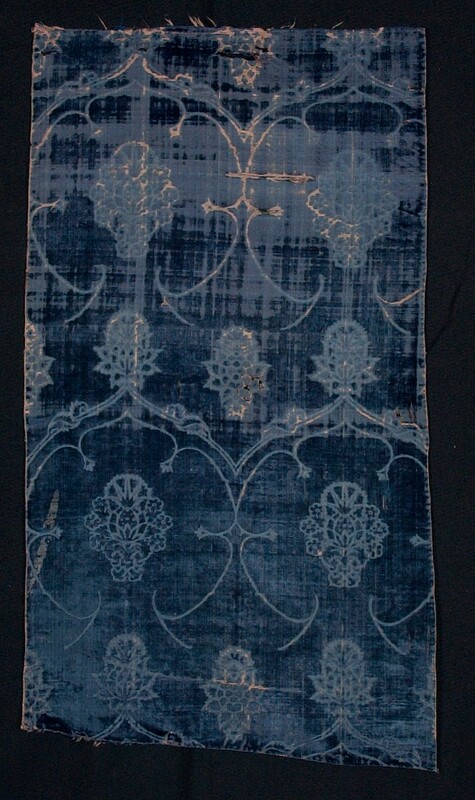
This blue cut and voided velvet is compound weaved in the "feronnerie" velvet style with a pomegranate motif within lobed ogival arches.
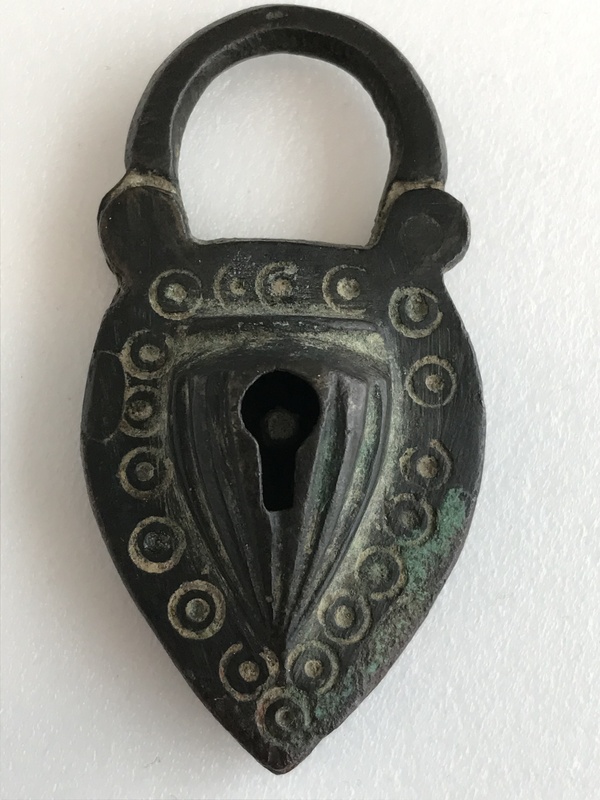
Small lock with vase at center of front plate. The front plate and vase are cast in one piece and the back and sides are cast in one piece. The front plate is attached to the back and sides via two tabs that are bent over onto the top plate over the…
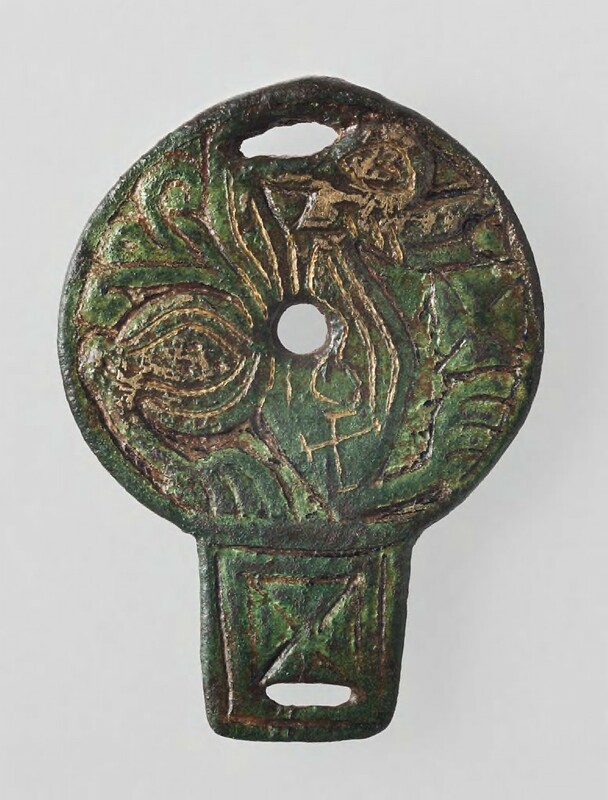
"This circular attachment joins a disc with gold-wire dragon decoration to a rectangular tang. A very regular circular hole pierces the middle of the disc. There is an irregular elliptical hole at the top of the disc and a more regular elliptical…