Metallurgy and Economics
In order to adequately protect the body in battle, a strong, functioning suit of armour is necessary. Medieval blacksmiths employed several techniques in designing and forging armour to maximise their effectiveness; however, armour had few uses outside of shielding its wearer. Instead, it is the labour of making armour that reveals aspects of Medieval society. Many Medieval metallurgical practices and techniques went into the manufacturing of different kinds of armour, and this was both time consuming and labour-intensive. This resulted in armour being expensive, and consequently, only wealthy nobleman could afford to purchase it. As such, armour exemplifies the metallurgical labour of the working class and demonstrates the economic trait that goods requiring a lot of labour required a high price in exchange.
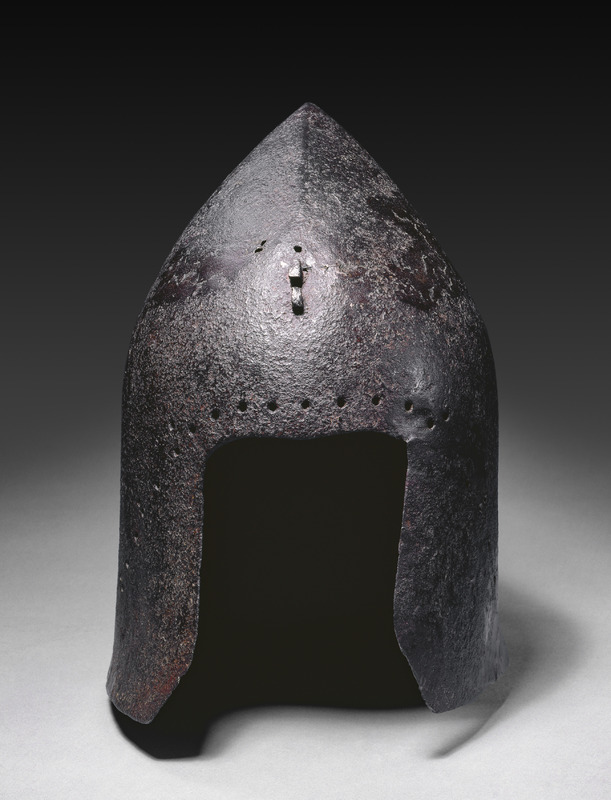
Barbutes were a type of helmet that were forged out of one piece of iron or tempered steel. This heavy helmet covered the entire head, with only a T shaped opening in the front for the eyes, nose, and mouth. It could be made with several modifications, all benefiting the protection or comfort of the wearer. These include linings attached to small holes around the neck of the helmet or to a leather band. The barbutes were generally plain, but some were decorated with studs. Some had pivoted visors or hinged cheekpieces. This object demonstrates the plethora of designs that could exist for one object, of varying complexities.
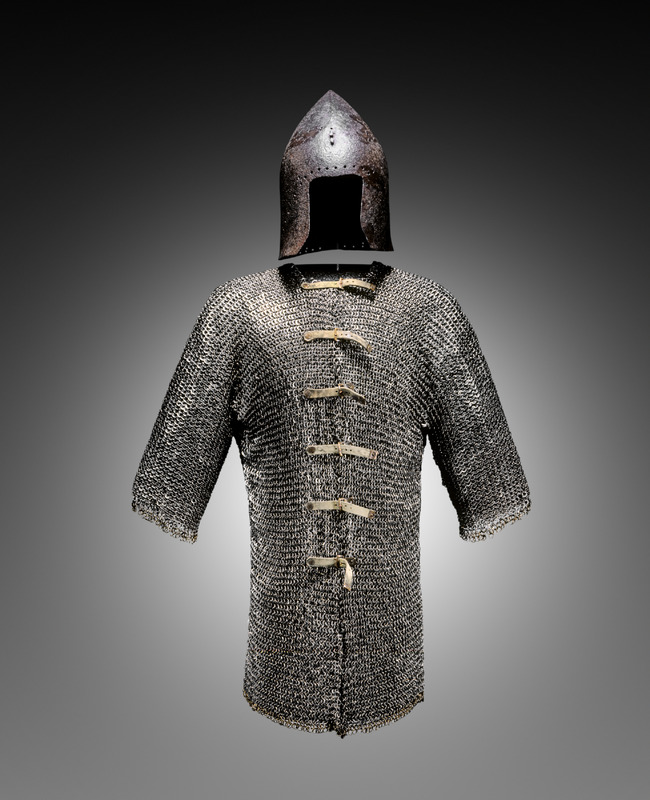
The Hauberk is a long suit of mail, made primarily of steel. The process of making chain mail was labour-intensive, and consequently, very costly. It is estimated that a shirt of chain mail, such as a Hauberk, may have been made of between 28,000 and 50,000 links, requiring at least 75 days to produce. The cost of the months of labour that went into the production of this Hauberk likely resulted in it belonging to a wealthy nobleman.
To learn about how chain mail is made, click here.
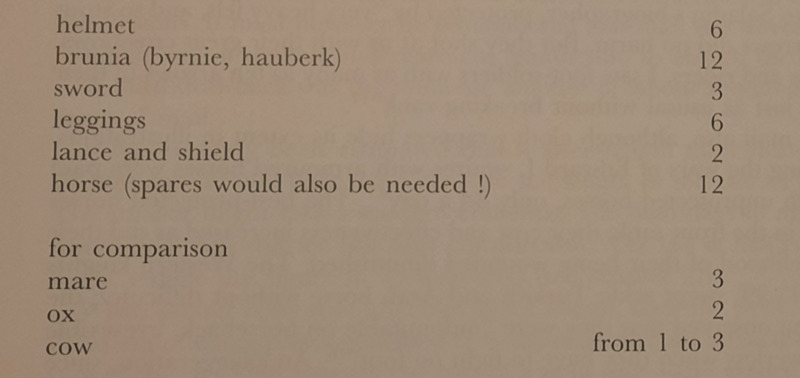
This chart explains the cost breakdown of a soldier’s equipment, in solidi, or gold coins. It clearly shows that a Hauberk is one of the two most expensive pieces of equipment, and of these two, is the only one that is manufactured. However, it is important to note that these were the prices for Frankish soldiers in the 8th century; it is possible that costs would have decreased by the Late Middle Ages due to improvements in production efficiency. Nonetheless, due to chain mail being highly labour-intensive, it would remain more expensive than other forms of armour.
Similarly, as a Barbute is a form of helmet, its cost was likely similar to that of a helmet. Unlike a Hauberk, a Barbute is forged from a solid, but large, piece of steel or iron. Steel was more difficult to produce than iron, as steel requires certain carbon concentrations and temperatures to be forged. As such, the cost of a Barbute would have likely been based on the material used and design; given this, it is logical that a Barbute is one of a soldier's second most expensive pieces of equipment, and that as this Barbute was made of iron, it likely cost less than one made of steel.