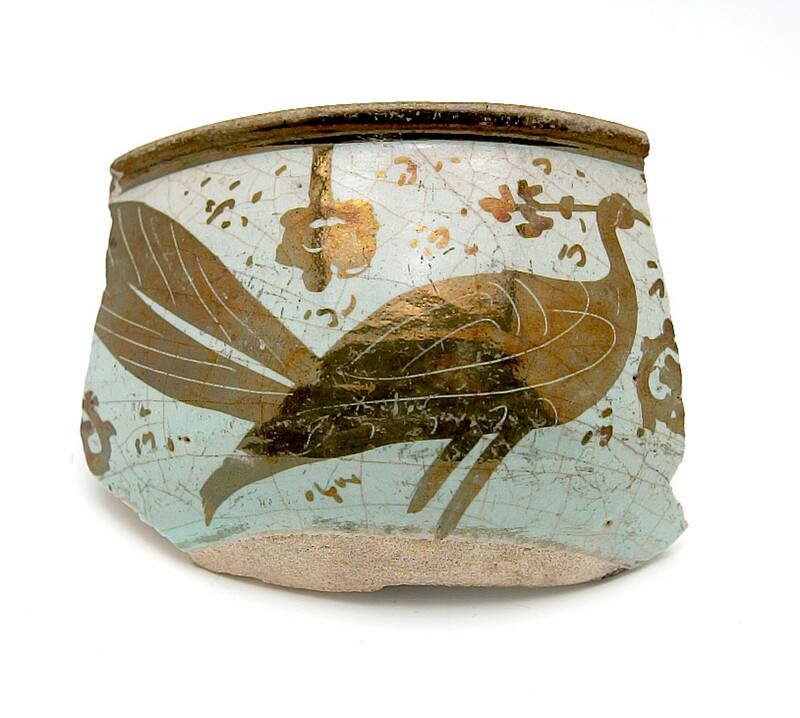
Displays of Wealth
There were many ways of acquiring, consolidating, and preserving power in the middle ages, but when it came to asserting power, one method shone above all others: wealth. As the most universal and visible form of power, wealth and its luxurious trappings are a near-ubiquitous display across cultures—and the Middle Ages are no exception. Here, one may see the myriad ways different groups flaunted their power in this era and what these displays of wealth reveal about the world from which they came.
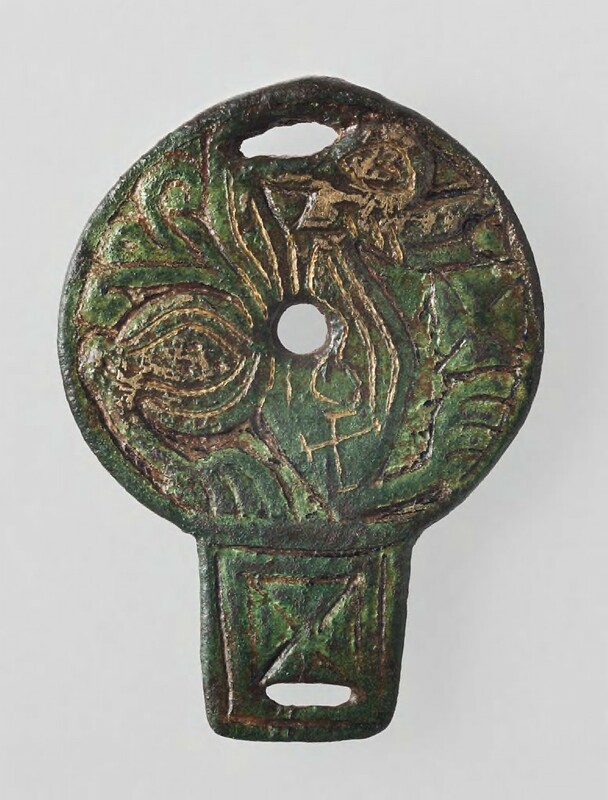
This ornamental attachment was once gilded in gold, and traces of the precious metal may still be seen on the stylized dragon in the center. Aside from gold's inherent value and eye-catching luster, gilding another metal with it was no simple task—in this period, it involved the use of mercury, a highly toxic metal. Whoever wore this artifact had the power to afford quality materials and craftsmanship and wanted everyone to know it.
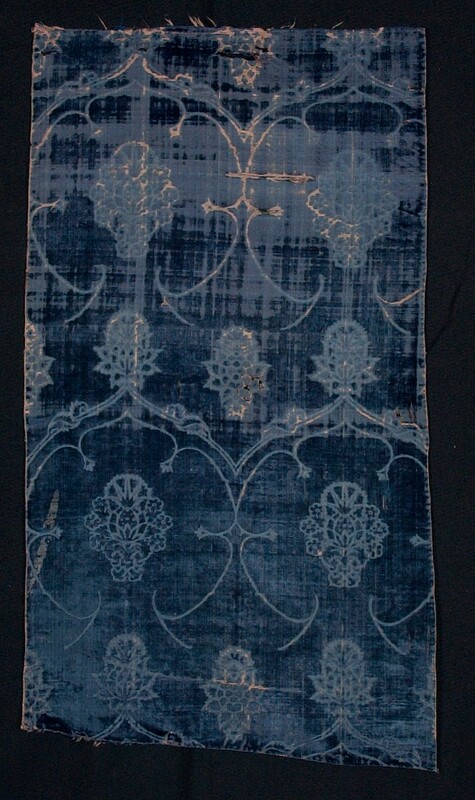
The labor-intensive nature of pre-industrial textile production made fabric in the Middle Ages incredibly expensive so naturally, the fashionable turned to long skirts, sleeves, and capes to flaunt their wealth. This fragment of velvet, on top of its impressive size (95.6 x 54.6 cm or 37 5/8 x 21 1/2 in) was also dyed a rich blue and adorned with intricate patterning. Anyone who was willing to invest in materials like this was clearly attempting to project an image of status.
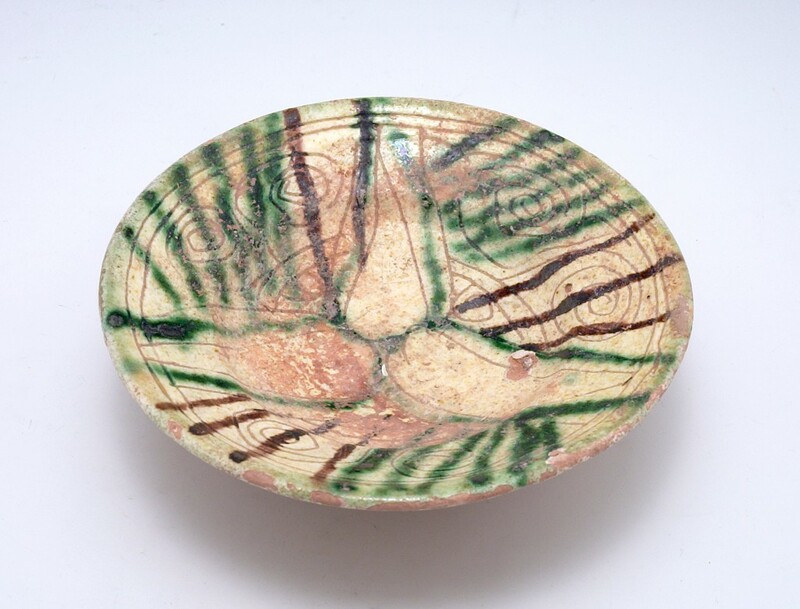
This bowl, with its wide, shallow rim and conspicuous coloring and engravings, was likely more decorative than functional. Someone who could afford to sacrifice practicality for aesthetics was likely in a higher class and wanted to demonstrate that.