Economic Regulation
Power is exercised, but it is also created and constructed. Individuals and groups operationalize ideas, institutions, and even objects to define power within society, typically to their benefit. These three objects reflect the construction of economic power in the medieval world, from the association of economy with political authority, the physical regulation of economy, and the instruments of economic organization.
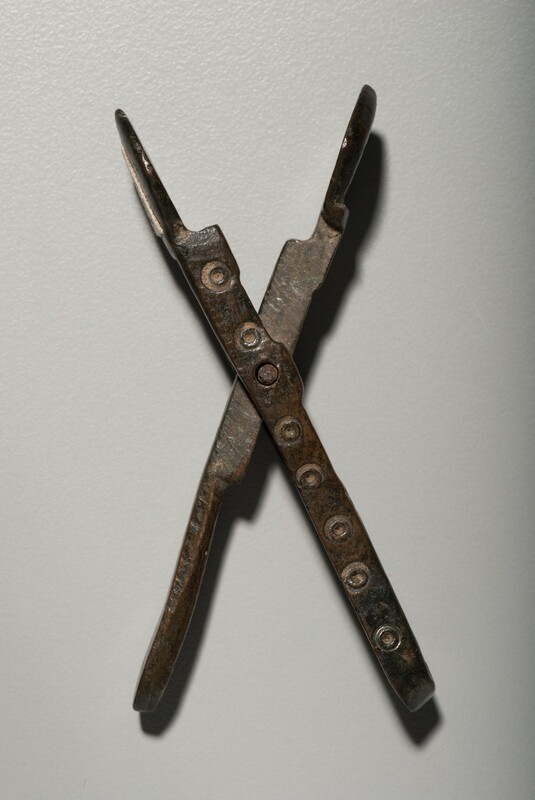
This Late Antiquity Byzantine coin scale represents the regulation of the medieval economy. By measuring the thickness of the coin, the scale offered a measurement of the amount of metal and, in turn, the value of the coin. Thus, the coin scale gave its owner the capability to make precise economic calculations and the flexibility to alter their coins (by shaving off metal to a certain thickness), both important elements of economic power.
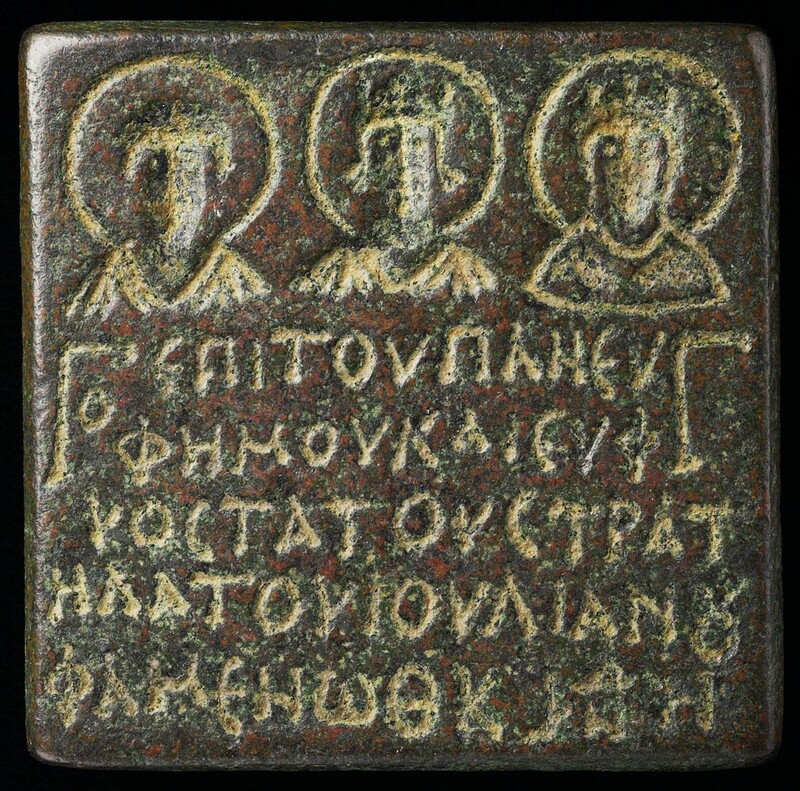
This Late Antiquity coin weight has similar implications to the adjacent coin scale—the standardization and regulation of money and economic power. However, this weight also signifies another common dynamic in the construction of economic power: the association of economy with authority. Here, both a local official and the imperial rulers are depicted on the weight, explicitly linking themselves to the economy and enhancing their authority.
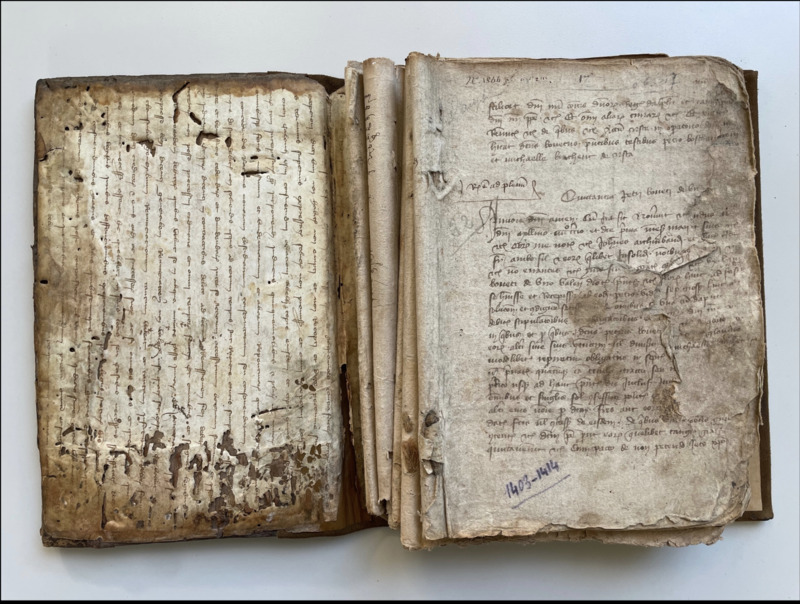
This Late Medieval French estate inventory represents the role of organizational tools in the construction of economic power. The inventory was assembled at the request of the guardian of the children of the estate owner, presumably due to their mother’s intention to remarry. Thus, the inventory reflects the attempt to build understanding and shape the distribution of the economy of the estate.