Political Power
It’s common to imagine the Middle Ages as a period of feudal assemblies and decentralized political power. In contrast, political power could be remarkably institutionalized in the Middle Ages. As these objects show, political leaders displayed and legitimized their power in a variety of ways, from minting coins with their image to standardizing collective knowledge. Religious, economic, and physical power all contributed to the creation of political power.
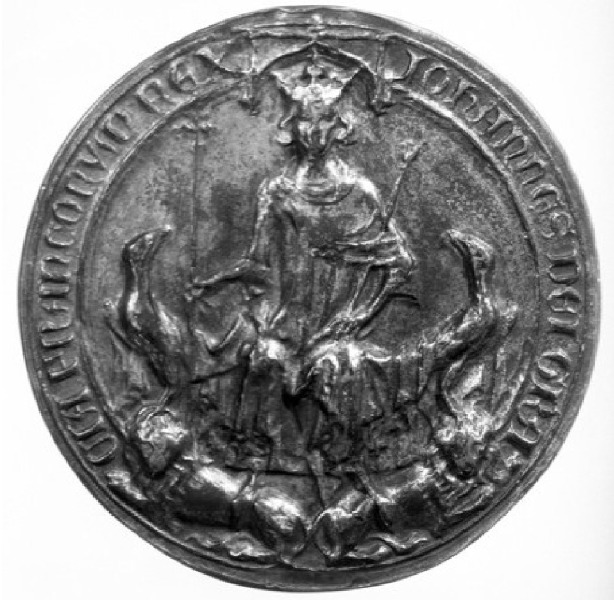
Depictions of monarchs on coins served as physical, daily reminders of the monarch’s power to influence policy and regulate economic affairs. This coin, likely minted as a token rather than currency, would have spread the image of King John and supported his legitimacy as a political leader.
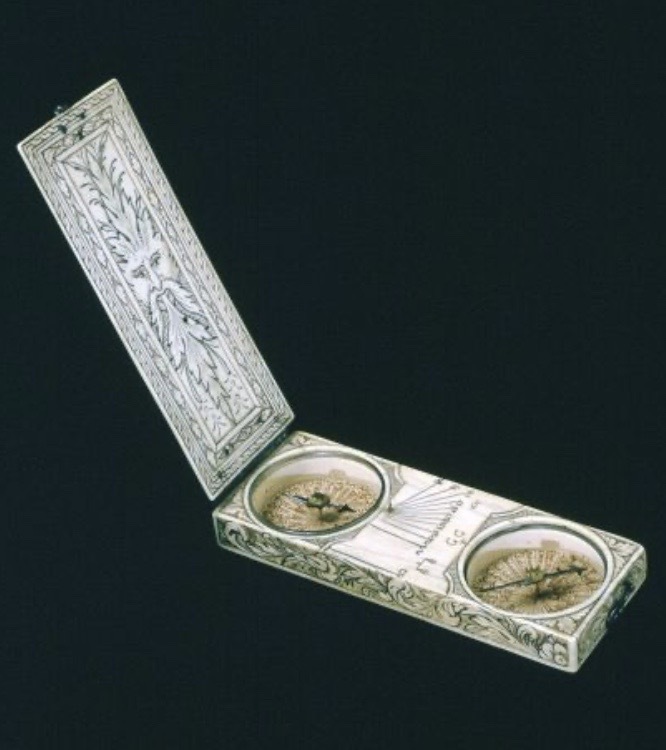
The Medici family accumulated significant political power as a center of banking and trade activity. By affixing their crest to this diptych sundial and compass, the Medici family tied themselves to navigation and exploration. As with coins, the display of a personal or family image affirmed one’s legitimacy as a political actor.
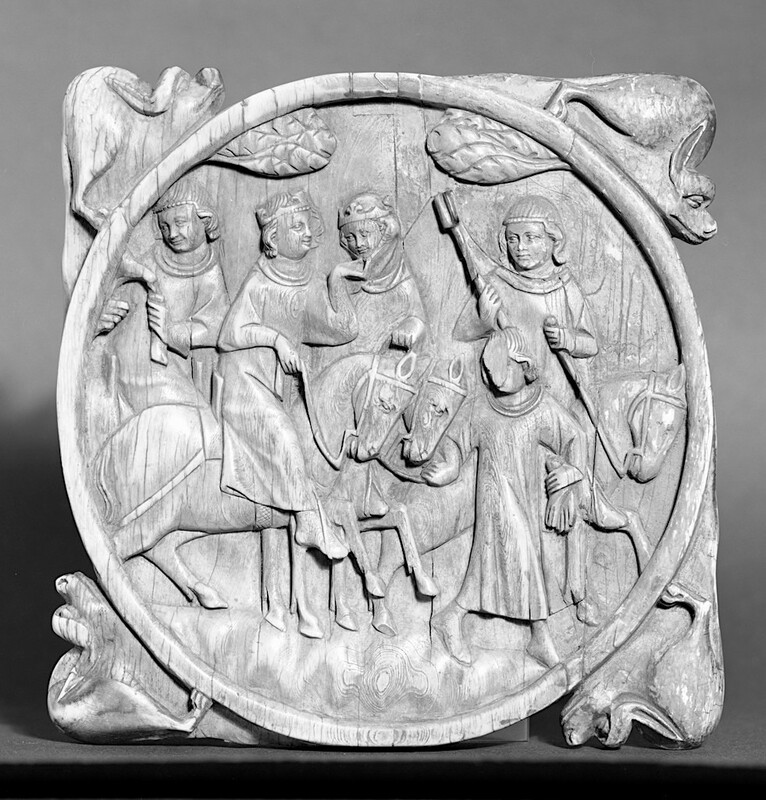
Political power is often tied to social status. This image of a noble couple on a hunting party reflects the political power of the noble class. For example, the election of Hugh Capet as King of France in the 10th century by an assembly of Frankish nobles illustrates the medieval nobility’s role in lending legitimacy to political leaders.
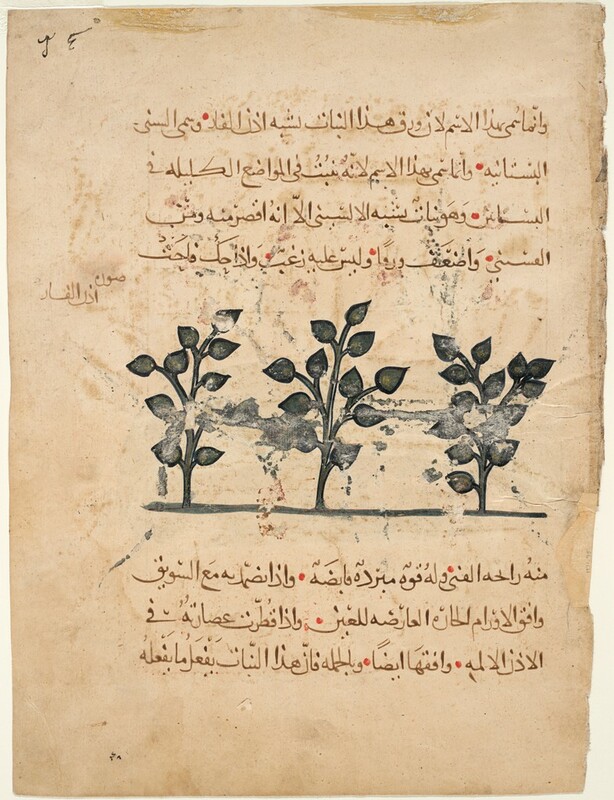
This text is a 13th century copy of a 9th century Arabic translation of Dioscorides’ De Materia Medica. Dioscorides, a physician in the first-century Roman army, wrote the De Materia Medica in Greek. In the early Abbasid era, academics supported by the Abbasid political elite translated nearly all available secular Greek literature into Syriac and Arabic. Though the state did not typically commission translation services, it is doubtless that Abbasid rule provided the political stability, economic prosperity, and in many cases even the physical workshop spaces necessary for translation activity.